
KeyFlow · Transaction management
Most agent software is built for the brokerage. This one is built for you.
Your pipeline, your contracts, your cap and commission math, and the portal your client actually sees — in one app. You are the account holder, not a seat in someone else's.
Private beta · Free while it lasts · No card
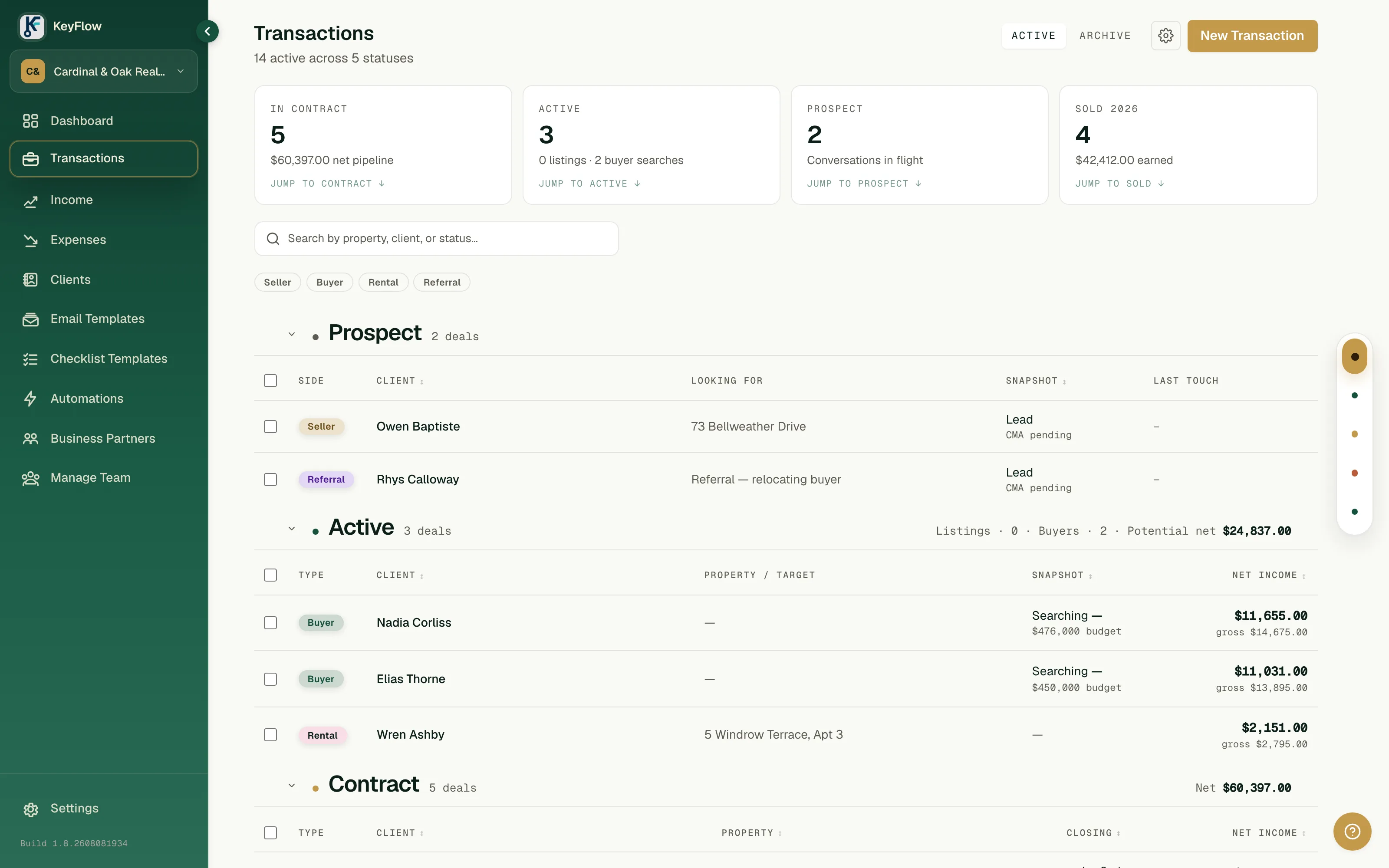
Fictional workspace — synthetic clients and addresses.
How to read this page
Six figures in four parts, following one deal from the day it lands to the day the year closes. Each figure is a screenshot of the running app, annotated. Nothing below is a mockup drawn for this page — it is the software, loaded with a fictional workspace so no real client's file appears here.
Part one
The file, before it is a file.
Fig. 01 – 02
Every deal, on one surface.
You can see where every file stands without opening one of them, which is most of what you need on a Tuesday morning.
Pick a surface — this figure shows all ten
Fictional workspace — synthetic clients and addresses.
Start from the contract you already signed.
Drop the executed purchase agreement in. Parties, price, dates, and contingencies come back populated, with every extracted value sitting next to the field it filled so you can check the work.
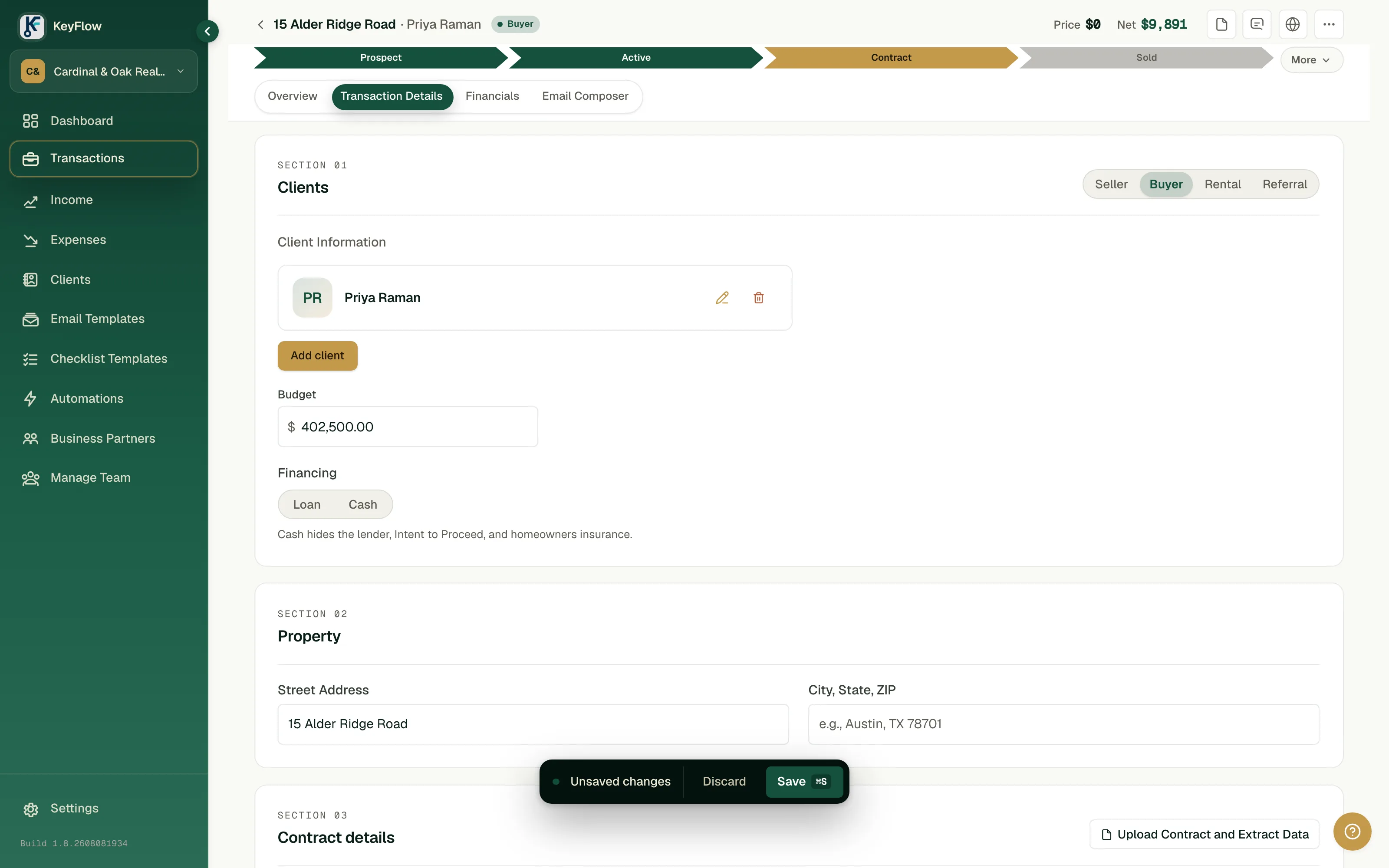
Fictional workspace — synthetic contract.
Part two
Then the part that is actually yours.
Fig. 03
The number nobody else will model: your cap.
Gross commission, company split, fees, and what actually lands in your account — per deal and against your cap for the year. This is the figure your brokerage's software does not draw, because it is not their number.
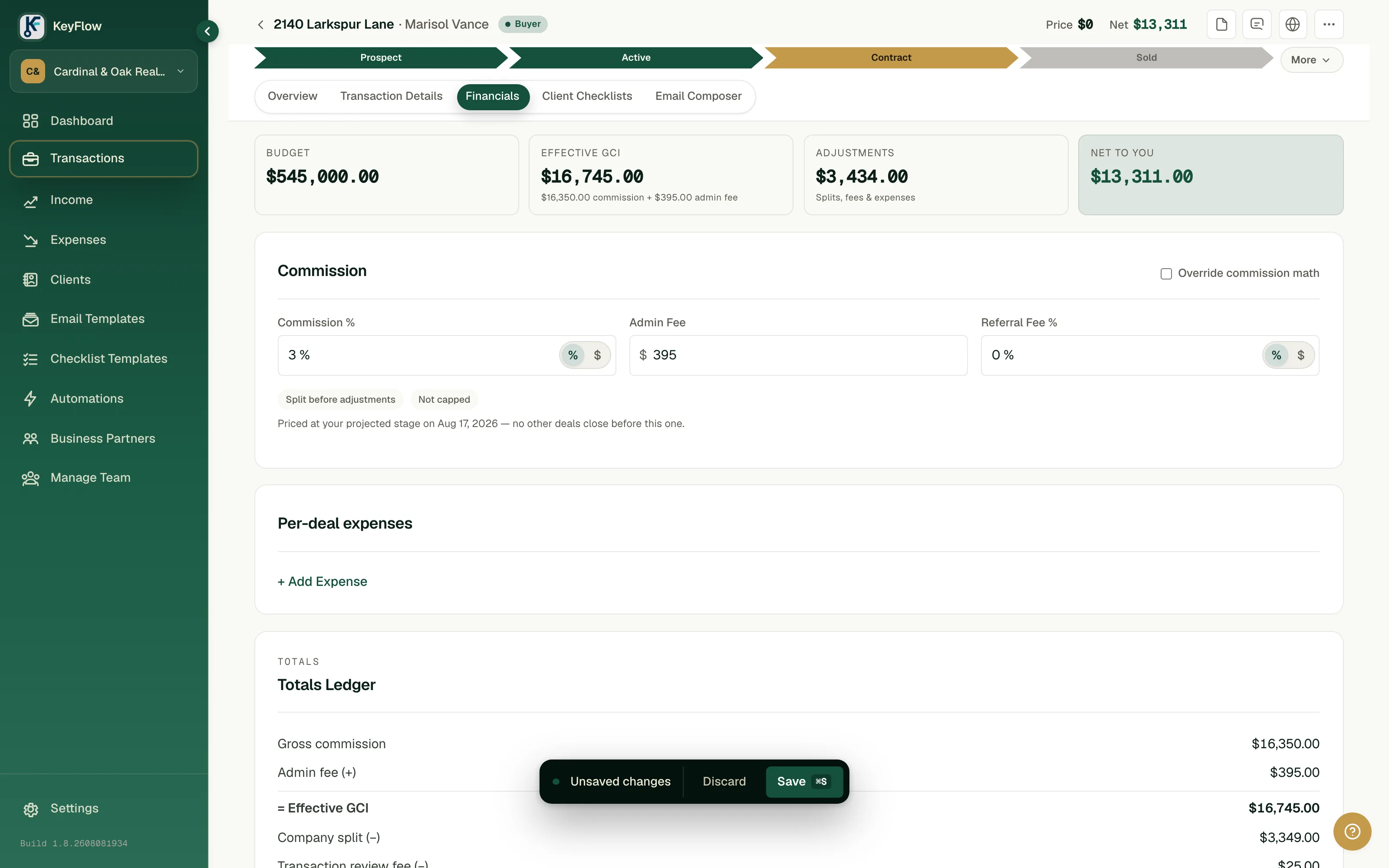
Fictional workspace — synthetic figures.
Worked example — not a screenshot
$16,000 cap · 80/20 · $285 fee
Company dollar paid this year
$8,000 of $16,000
$40,000 this year
The same deal, priced where you are
325 Larkspur Lane
$325,000 · 3.00% · Buyer side
Pre-cap
Every dollar of this deal still splits with the company. Drag right to move through the year.
Part three
The side of it your client can see.
Fig. 04 – 05
What your client sees.
One link, your branding, no account to create. The annotations on this figure are written from your buyer's side of the table, because that is who reads it.
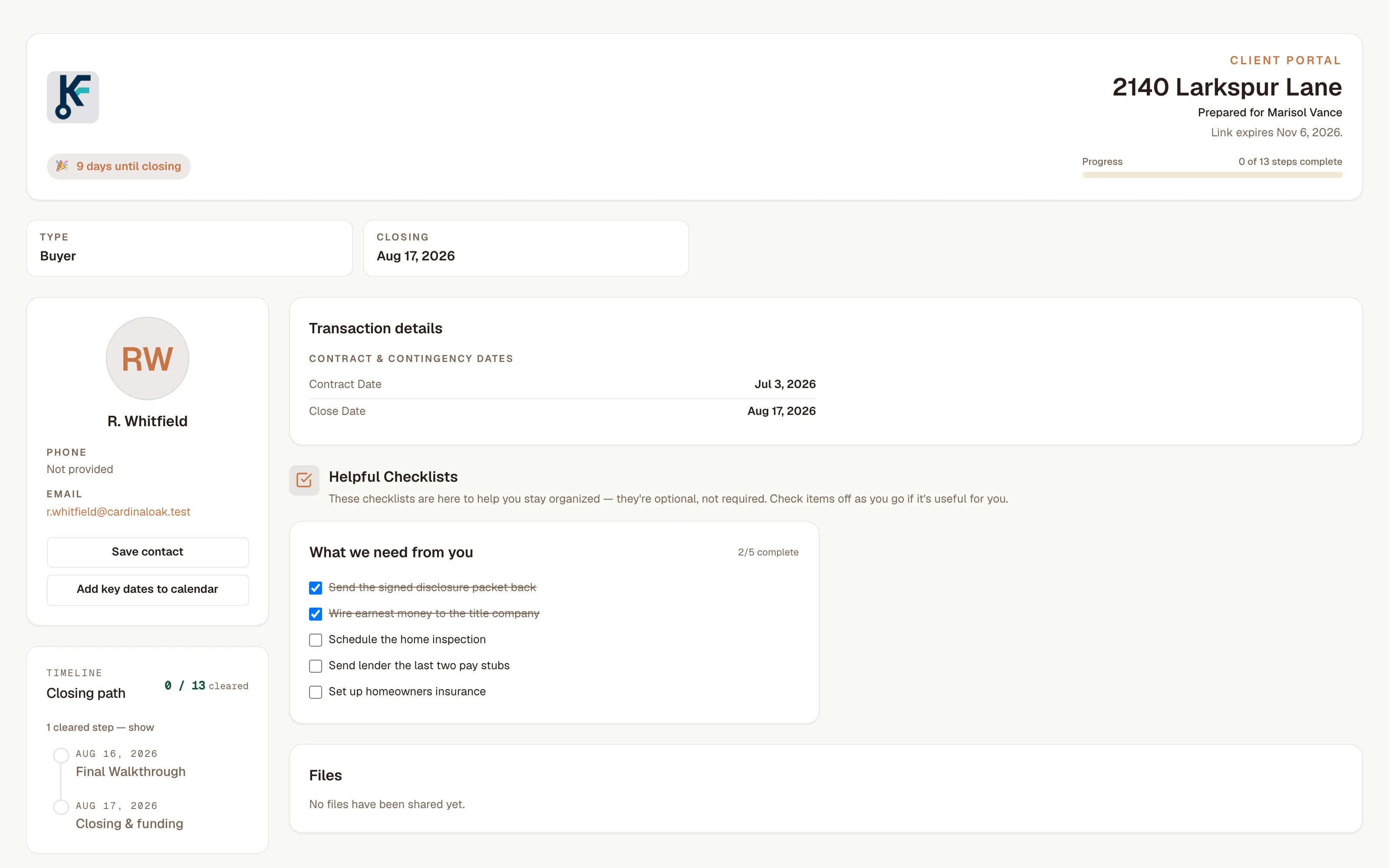
Fictional workspace — synthetic client and property.
Texts that are boring on purpose.
Milestone updates by SMS and email, sent from your file. Consent is collected before anything goes out, and the opt-in screen below is the one your client actually sees.
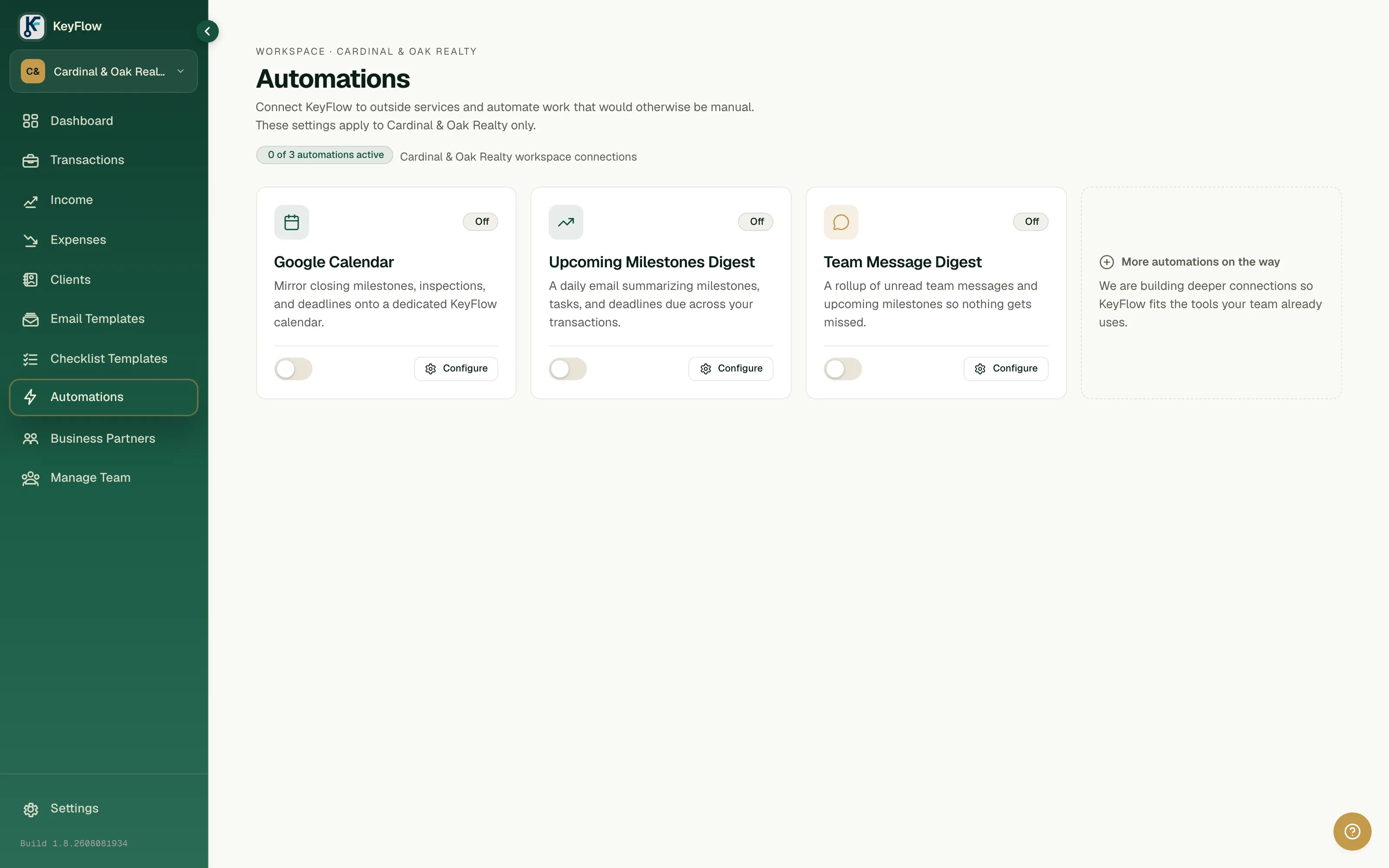
Fictional workspace — synthetic recipient.
Part four
And then the year has to add up.
Fig. 06
Closing the month, and then the year.
Income and expenses against the deals that produced them, so the question at the end of a month is a lookup rather than an evening with a spreadsheet.
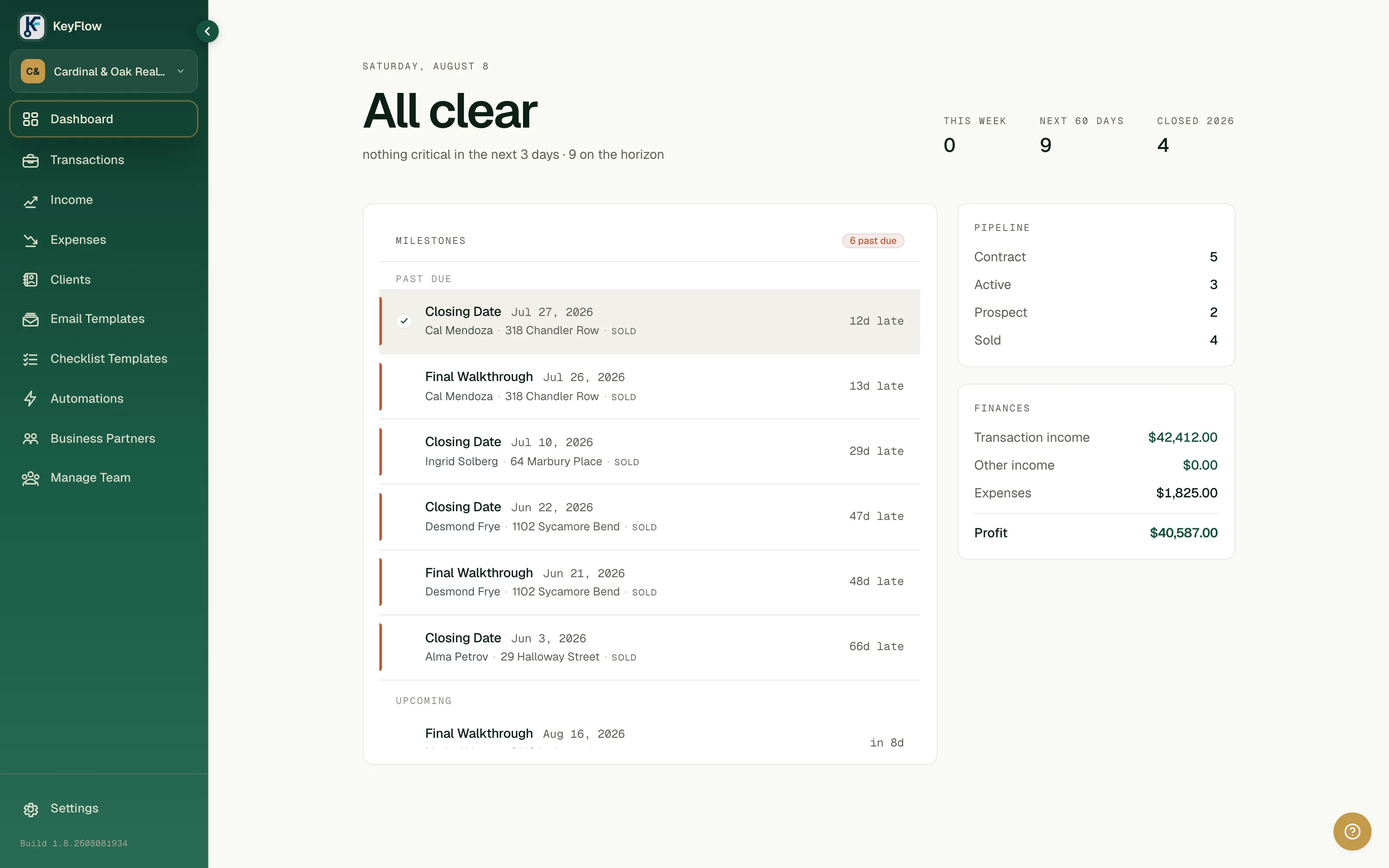
Fictional workspace — synthetic figures.
Questions worth answering
Not covered here? hello@keyflow.homes
- My brokerage already gives me transaction software. Why this?
- Because theirs is built for compliance and oversight — it exists so the brokerage can see the file. It does not model your cap, your split, or what you personally clear on a deal, and it goes away when you change brokerages. This is your account, with your data, following you.
- I have an assistant and a transaction coordinator. Does that work?
- Yes. You can extend access to the people who work your files with you, and the workspace stays yours — they work inside your account rather than you working inside theirs. That is the same distinction the rest of this page is about, and it matters more with a team than without one: a lead who changes brokerages has more to move.
- Does it use my state's forms?
- KeyFlow does not generate or file contracts. It reads the executed contract you already use and manages the transaction around it — dates, checklists, money, and communication.
- How much does the AI decide on its own?
- Nothing. Contract extraction proposes values and drafts emails; you approve or edit before anything is saved or sent.
- Will it text my clients without permission?
- No. See Figure 05 — consent is collected on a screen your client sees, per client, before anything sends. STOP ends it immediately.
- Can I get my data out?
- Yes, as CSV, whenever you want, without asking anyone. Figure 06, callout 02.
- Who is behind it?
- Interactive MM, LLC. KeyFlow is pre-launch and in private beta — there is no customer list to show you yet, which is why this page shows the software instead.
The tool you wanted three closings ago.
The beta is small on purpose, so the people in it get answered. Tell us roughly how many deals you run a year and we will be in touch.
Opens your email app. We use your address to reply about the beta and nothing else. Privacy policy.